Žofinka Ostrava !!!
The project aims to win over its residents and create an environment they can be proud of—not only as part of Ostrava, but also as a unique, newly emerging urban district.
A comparison with the mythical Phoenix comes to mind. Žofinka offers the opportunity to experience the rebirth of a location that is symbolically rising from the ashes of Ostrava. It tells a story of transformation and a promising future, offering space for a new beginning and a return to roots.
| Project: | Žofinka Ostrava, urban and architectural competition |
| Competition result: | 1st place |
| Authors: | Pavel Hnilička, Marek Řehoř, Jan Pačka, Milena Raičević, Veronika Žďárská, Ondřej Lebeda, Petr Fogl, Mikuláš Valdman, Linda Skřivánková |
| Cooperation: | Jan Haruda, Roman Korzec, Martin Strakoš |
| Transport infrastructure: | Projekce dopravní Filip |
| Landscape architecture: | Steiner a Malíková krajinářští architekti |
| Client: | Pod Žofinkou Holding a.s. |
| Area: | 20 ha |
| Year: | 2025 |
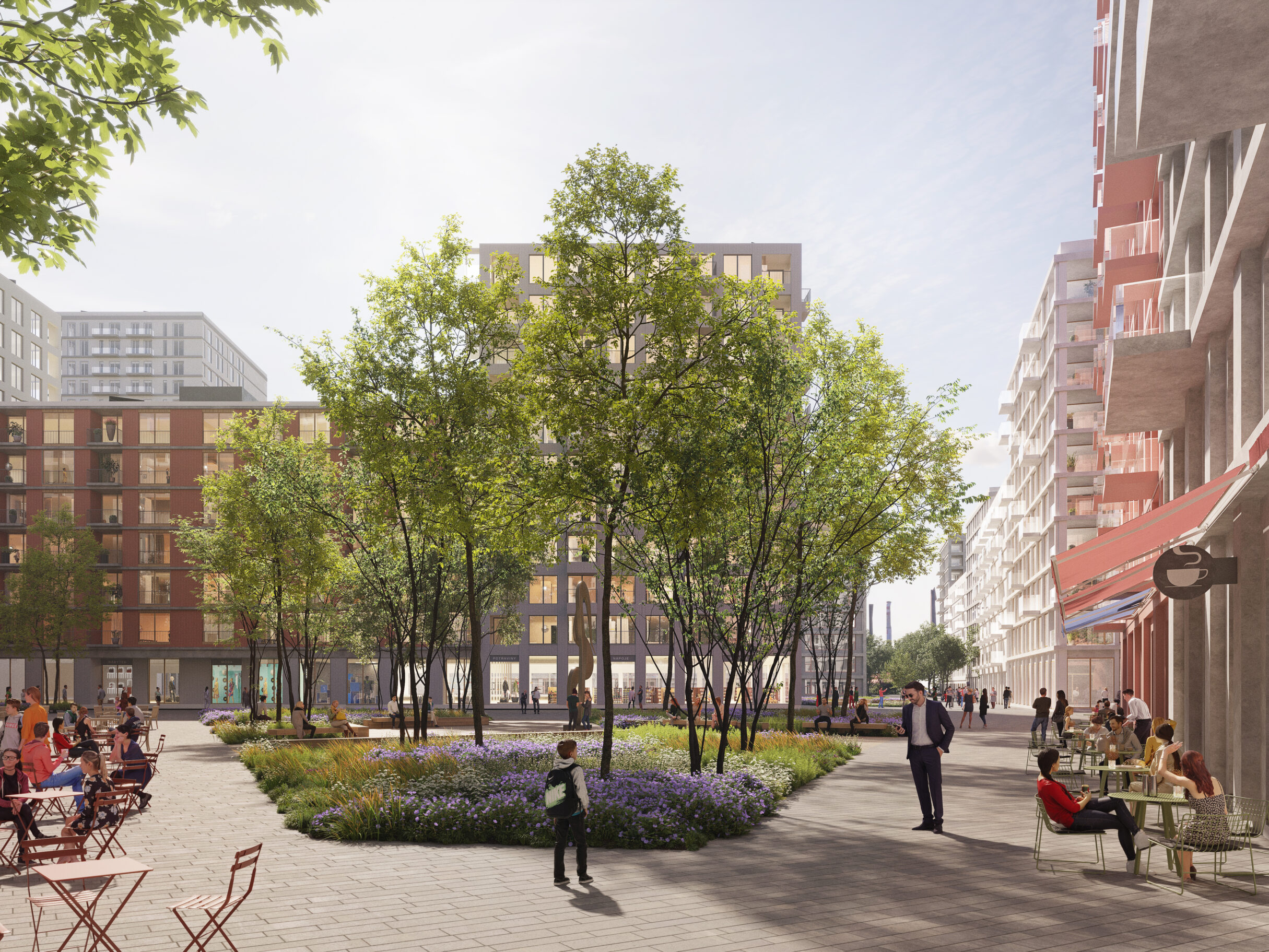
Žofinka is a place that has no direct parallel in Ostrava. It does not aspire to be an extended historical center, nor does it try to build on the industrial aesthetics of nearby Vítkovice or capitalize on the popularity of its surroundings. It is subtle and multi-layered. In one place, it pulsates with the energy of new opportunities, while in another, it creates a feeling of calm and timelessness — similar to the Ostravice River lining its eastern edge.
Like Ostrava itself, Žofinka evokes emotions. And emotions are natural and formative for a city. The newly emerging district may not be the center of attention, yet — or perhaps because of this — it is open, permeable, and maximally accessible. It can provoke and naturally blend in, captivate and inspire, regardless of whether one spends an hour or a lifetime here.
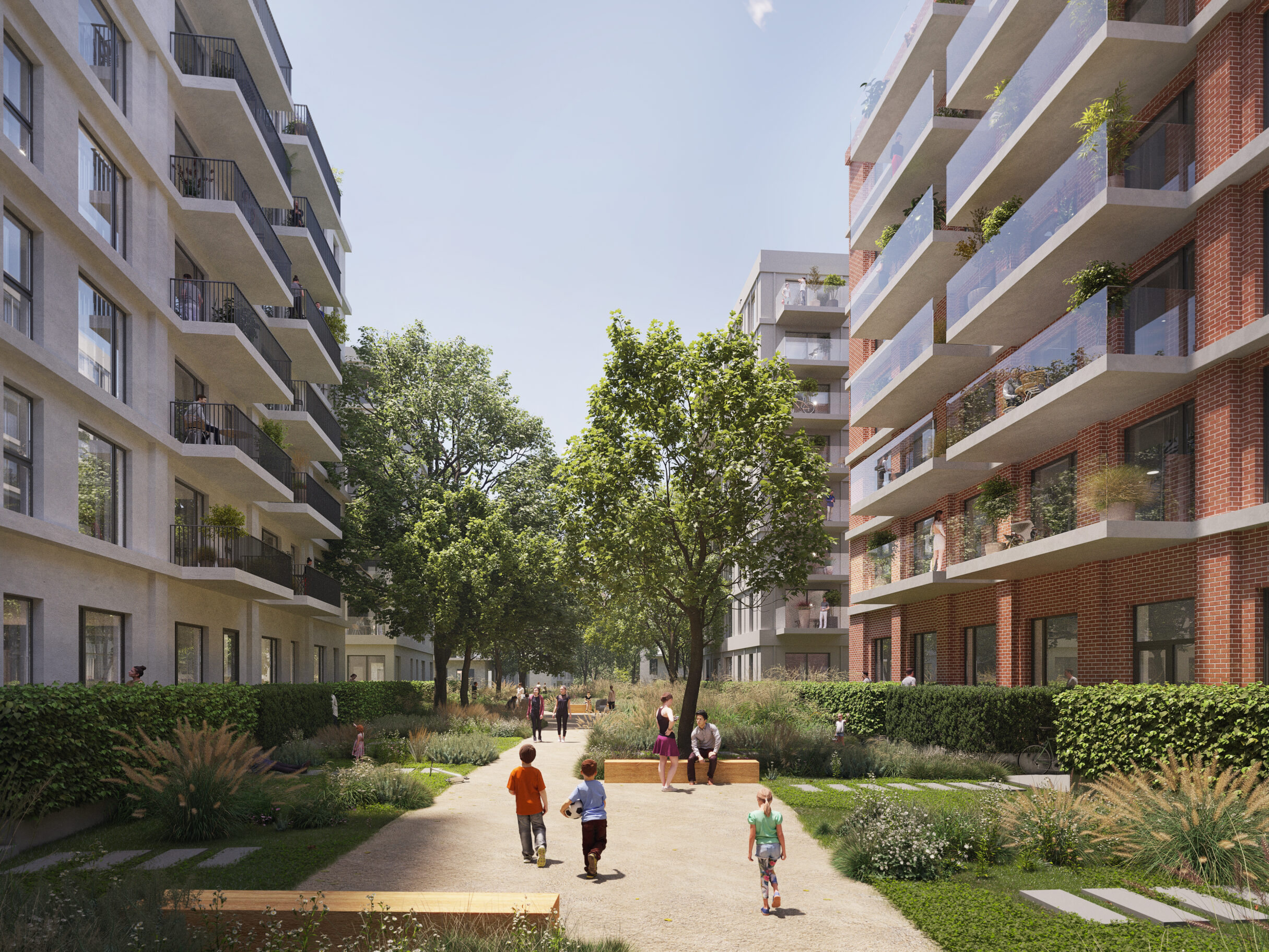
Through a well-thought-out urban structure, quality housing, a wide range of civic amenities, unique green spaces, and the overall attractiveness of the area, a true urban "melting pot" is emerging, one that Ostrava deserves.

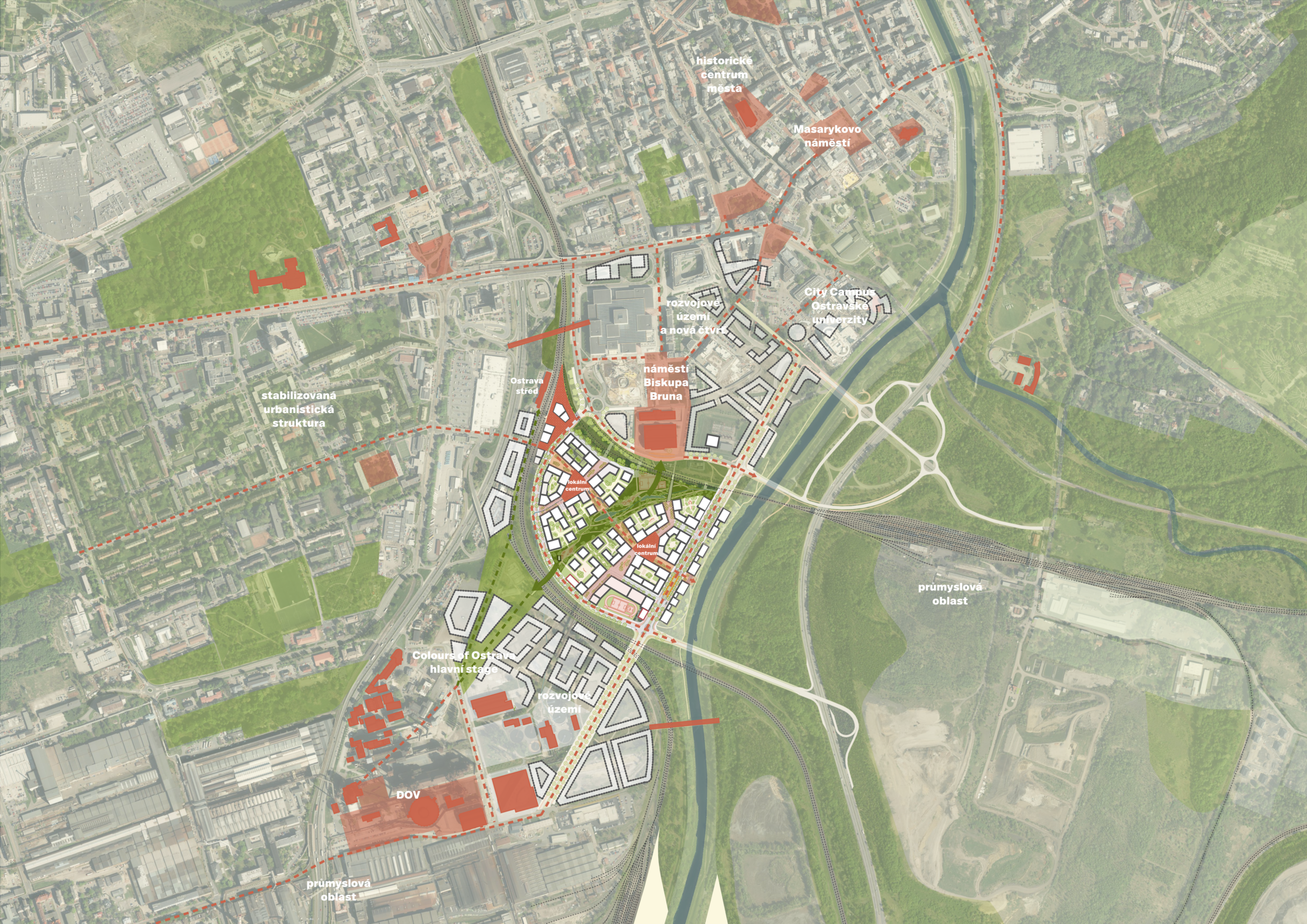
In our design, we work with a wide range of public space characteristics. We define two focal points of the district, i.e. two local centers. The first is located near the Ostrava-střed railway station, connected to Nová Karolina and the "U vlečky" park. The second is situated on the upper level, connected to the footbridge leading from Trojhalí, and is deliberately set back from the new Jedna míle street.
The main pedestrian route runs through the Žofinka area, guiding residents and visitors through both centers of the district. The journey from the train station to the river takes approximately fifteen minutes, passing through spaces of varying scale and character. At the same time, however, this route can also offer a significantly longer stay — individual "pocket points" invite you to stop and offer a variety of ways to spend your time. The diversity of the character of public spaces thus creates a wide range of ways to use them.
The post-industrial area of the former Žofín steelworks has extraordinary potential to become one of the most attractive places in the city. The concept, based on interconnecting landscape elements, supports the creation of a new green urban district, based on the key features of the area—the Ostravice River, industrial slag heaps, the original mill race, ruderal vegetation, and distant views of Lysá hora and the Lower Vítkovice area.
We see significant potential in particular in the possibility of connecting the existing public spaces at Trojhalí and in the Lower Vítkovice area through the landscape structure. The new park opens up towards Trojhalí and flows smoothly through the newly emerging district, becoming an integral part of it.